It’s 1972. The year after I discovered that music could be more than romantic ballads from the Emerald Isles or the pop of a four-piece combo from Merseyside.
Music in our house belonged to adults. There were Irish songs full of heartbreak, exile and waiting mothers with greying hair. Then there were clean-cut men in tailored suits and crisp white shirts, their ties firmly knotted, singing songs designed not to offend anyone.
My mum liked the crooners with soft voices. My dad liked the Irish rebel stuff.
At St Theresa’s Social Club, where our parents took us because it was cheaper and easier than finding someone to mind us, I enjoyed it well enough. We were fuelled by unlimited lemonade or orangeade while the adults drank Babycham or Guinness, smoked Park Drive or Embassy and caught up on the craic.
But at home, none of it really belonged to me.
The previous year, the older brother of my boyhood crush Lynn had played me Electric Warrior, and my world opened up to the elfin god that was Marc Bolan.
Marc was unlike anybody I had ever seen. The curls, the glitter, the clothes, the way he looked straight at the camera as if he knew something the rest of us didn’t. I didn’t know whether I wanted to be Marc, look like Marc or live in whatever world he inhabited. I only knew I wanted more Marc, and that the world suddenly seemed bigger than Whitehead Road.
Thursday evenings were spent in front of the television, waiting and hoping he would be on Top of the Pops, willing the other acts to hurry up before the credits rolled.
But how was I, a 12-year-old with a paper round, going to get my hands on some of his music? I couldn’t keep popping round next door and asking for “that” record to be played for the millionth time.
As luck would have it, my dad, a labourer and would-be carpenter, brought home the newspapers from whatever job he was working on that day. He piled them beside the open fire we relied on to heat the water and keep us warm.
One of them was The Sun.
It was mainly bought for the football and the scantily clad Page 3 models back then. But one day, flicking through it, I noticed an offer for a record, and T. Rex was on it.
By collecting tokens printed in the paper and paying the postage, I could own a record with three songs by the beautiful Marc.
I had no idea who the other bands were. They were probably the same ones I wished off Top of the Pops every Thursday.
But that didn’t matter.
Here was my chance to own a record with Marc on it. Not borrow one. Not listen to somebody else’s.
Own one.
Every day, Dad would get home from work after popping into The Barton Arms or the Aston Hotel for his usual pint or two of Guinness or Ansells bitter. I remember the smell of beer and Old Spice on him as he came through the door, the newspaper rolled up in his jacket pocket.
I would grab The Sun, find the token and carefully cut it out.
For once, The Sun was more valuable to me than it was to my dad. Until I had removed that day’s token, it wasn’t newspaper.
It was part of a record.
I don’t remember how many tokens were needed or how much the postage cost, but I had a mission. I watched the little pile grow until the day arrived when I had enough. I sent them off with a postal order and waited.
This was long before next-day delivery or tracking numbers. You sent something away and waited.
And waited.
Eventually, a slim, 12-inch-square parcel arrived for me.
Me.
I never got post. There was my name on the label, and inside was something I had worked for and wanted more than anything else in my small world.
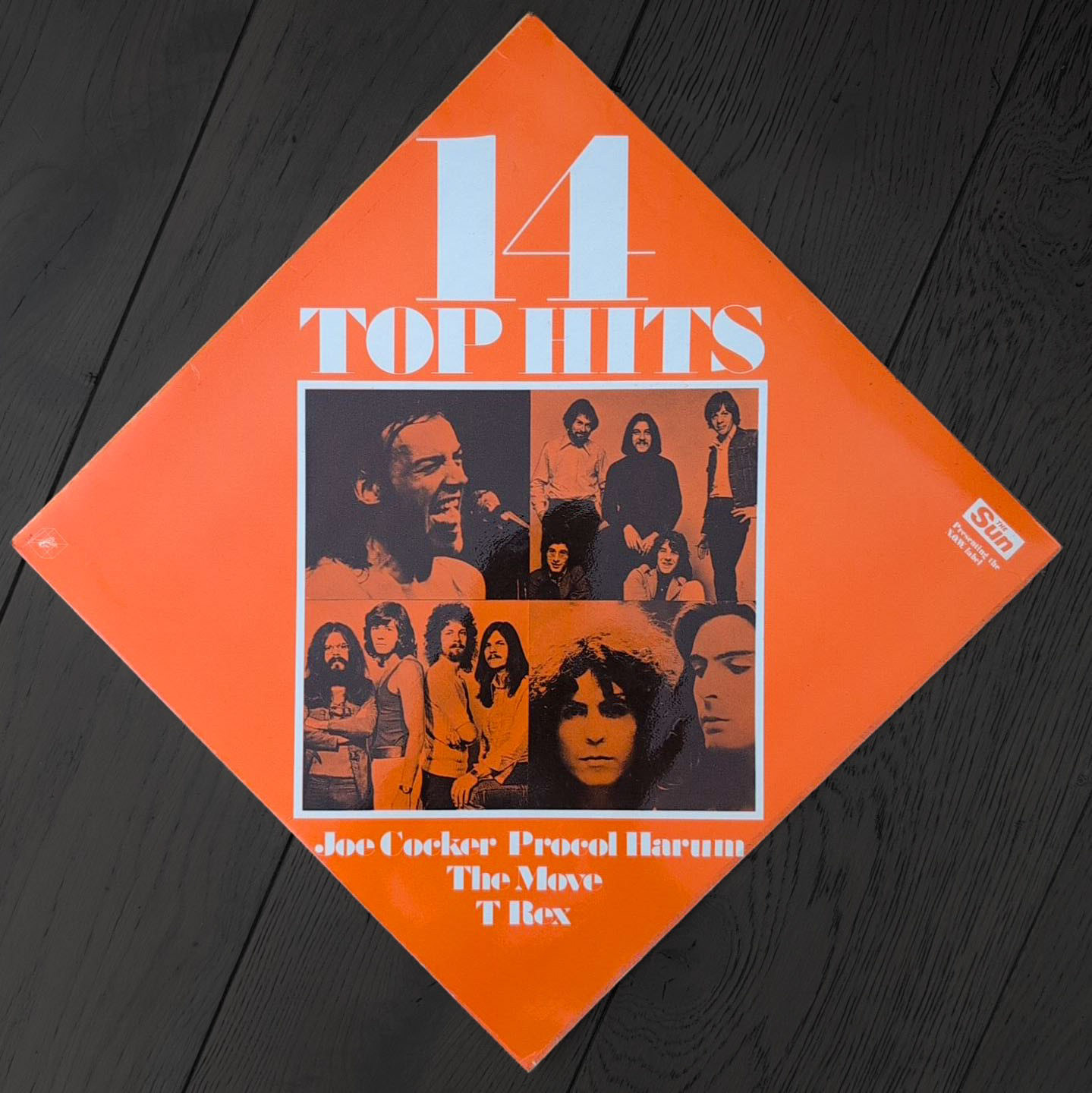
I carefully opened the package and pulled out a bright orange sleeve. Across the front, beneath the words 14 Top Hits, was a collage of people I barely recognised. At the bottom were their names: Joe Cocker, Procol Harum, The Move and T. Rex.
Then I saw him in the bottom-right of the collage: Marc, with Mickey beside him.
There he was.
I had him in my hands.
Mine.
We had an old radiogram in the front room, kept for visits from the local priests or for when my dad had his drinking mates over. It wasn’t really a room for children.
The radio was usually used on Saturday afternoons for the football results. At other times, when my dad was out, my mum would play Perry Como or Val Doonican and probably dream.
I slid the record from its sleeve, holding it carefully by the edges the way I had seen older boys do. Until then, Marc had been a face on the television or music coming from somebody else’s record player.
Now I could play him for myself.
I opened the radiogram and slipped my record onto the turntable. I selected 33 rpm and switched it to play.
The turntable began to turn.
The radiogram valves glowed and quietly hummed.
The record dropped, the arm lifted and moved slowly across before lowering itself into the groove.
For a moment, there was nothing but a faint crackle.
Then the music started.
“You’re so sweet
You’re so fine”
And I was, and he was.
I had Marc in the room, and all was fine.